

Product Categories
-
- Artery scissors
- Cartilage scissors
- Enucleation scissors
- Fine Operating scissors
- Fine scissors
- Fistula scissors
- Gynecological scissors
- lobectomy scissors
- Micro scissors
- Nasal scissors
- Operating Scissors
- Operating scissors-Dissecting scissors
- Plastic surgery scissors
- Scalpel Handles
- Supercut scissors
- thorax scissors
- Tonsil scissors
- Scissors
Fistula scissors
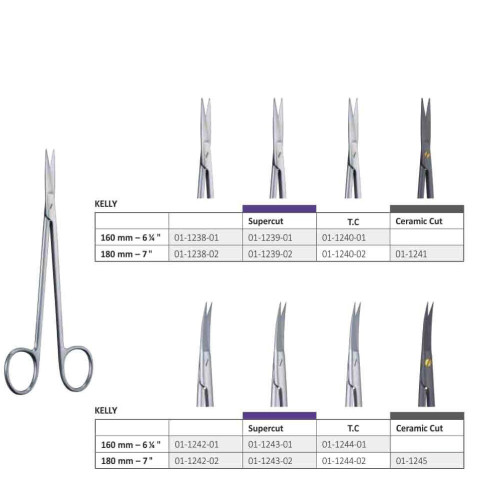
Fistula scissors are specialized surgical scissors used where controlled cutting or dissection is required during surgical procedures involving fistula-related anatomy. Their design can vary according to blade shape, curvature, tip configuration, and overall length, allowing surgeons to select an instrument appropriate to the intended application.
As part of the general surgery instrument range, fistula scissors should be selected according to the required surgical technique, tissue access, instrument dimensions, and handling characteristics. Different designs may provide different levels of access and control, so product-specific specifications should always be confirmed before procurement.
Stone Instruments Co. manufactures and supplies surgical instruments from Sialkot, Pakistan, including standard and customized surgical-grade medical device instruments. The company serves B2B customers seeking surgical instruments for professional and international procurement requirements.
Fistula Scissors for Surgical Applications
Surgical scissors are designed to provide controlled cutting and dissection through the interaction of two blades. Depending on their construction, scissors may be used for different surgical tasks, including tissue dissection or cutting other materials associated with surgery.
Fistula scissors are available in different designs across the surgical-instrument industry. Common design considerations include blade curvature, tip configuration, cutting-edge geometry, and instrument length. These characteristics can influence access, visibility, handling, and control during a procedure.
The appropriate instrument should therefore be selected according to the intended surgical application rather than by category name alone. Product-specific dimensions and configurations should be confirmed with the manufacturer before ordering.
Types and Configurations of Fistula Scissors
Fistula scissors can differ in several physical characteristics:
-
Straight or curved blades: Blade curvature can affect access and the working angle available to the user.
-
Sharp or blunt tips: Tip configuration should correspond with the intended application and required tissue handling.
-
Different lengths: Overall instrument length can influence reach, access, and handling.
-
Blade geometry: The shape and configuration of the blades affect how the instrument approaches and cuts the intended material.
These are general surgical-instrument configurations and should not automatically be interpreted as specifications of every Stone Instruments model. Buyers should refer to the individual product listing and article number for exact configuration details.
How to Choose Fistula Scissors
Professional buyers should evaluate the following factors before selecting a fistula scissors model:
-
Intended surgical application
-
Straight or curved blade configuration
-
Tip design
-
Overall instrument length
-
Working length where applicable
-
Blade geometry
-
Handling and control requirements
-
Required material and product specifications
-
Article number or product identification
-
Packaging and procurement requirements
For B2B purchasing, the article number is particularly important because it allows buyers to identify and communicate about the exact instrument requested. If a required dimension, configuration, or material specification is not displayed on the product page, it should be confirmed directly with Stone Instruments before an order is finalized.
Fistula Scissors Manufacturer and Supplier
Stone Instruments Co. is a surgical-instrument manufacturer based in Sialkot, Pakistan. Its website states that the company manufactures both standard and customized surgical-grade medical device instruments and supplies surgical instruments for international customers.
The company's product range includes General Surgery instruments, with Fistula scissors listed alongside other surgical-scissor categories such as artery, cartilage, enucleation, fine operating, micro, plastic surgery, supercut, thorax, and tonsil scissors.
For distributors, wholesalers, medical-device suppliers, and other B2B buyers, Stone Instruments can be contacted to confirm available models, specifications, customization requirements, and export-order details.
Quality and Manufacturing
Stone Instruments states that it manufactures surgical instruments using imported stainless steel sourced from the USA, Germany, France, and Japan. The company also states that customers may work with their preferred raw-material supplier and that raw-material certification is included with shipments.
The company states that its quality management system includes ISO 13485 and ISO 9001 certification and that it follows FDA Current Good Manufacturing Practices (CGMP). Its website also describes quality-control assessment of its products. These statements represent Stone Instruments' documented company claims and should be evaluated against the documentation applicable to the specific product and market.
Why Choose Stone Instruments for Fistula Scissors?
For B2B surgical-instrument sourcing, relevant considerations include:
-
Manufacturing of standard surgical instruments
-
Customized surgical-instrument capability
-
Product identification through article numbers
-
Surgical-instrument supply from Sialkot, Pakistan
-
International export positioning
-
Documented quality-management information
-
Raw-material certification information
-
Customer and after-sales support
Stone Instruments states that it has more than 25 years of experience as a family-owned and operated business and provides surgical instruments and other precision-machined products.
Fistula Scissors for Distributors and International Buyers
Fistula scissors may be sourced by surgical-instrument distributors, medical-device suppliers, importers, wholesalers, hospitals, procurement teams, OEM buyers, and private-label businesses.
Before placing a bulk order, buyers should confirm:
-
Article number
-
Instrument dimensions
-
Blade configuration
-
Tip design
-
Material/specification
-
Required quantity
-
Packaging requirements
-
Applicable regulatory documentation
-
Customization or private-label requirements
-
Shipping and export requirements
Stone Instruments' website provides product categories and article-number identification for its instrument range. However, product-specific specifications should be confirmed directly when they are not displayed on the relevant product listing.