

Product Categories
-
- Artery scissors
- Cartilage scissors
- Enucleation scissors
- Fine Operating scissors
- Fine scissors
- Fistula scissors
- Gynecological scissors
- lobectomy scissors
- Micro scissors
- Nasal scissors
- Operating Scissors
- Operating scissors-Dissecting scissors
- Plastic surgery scissors
- Scalpel Handles
- Supercut scissors
- thorax scissors
- Tonsil scissors
- Scissors
Cartilage scissors
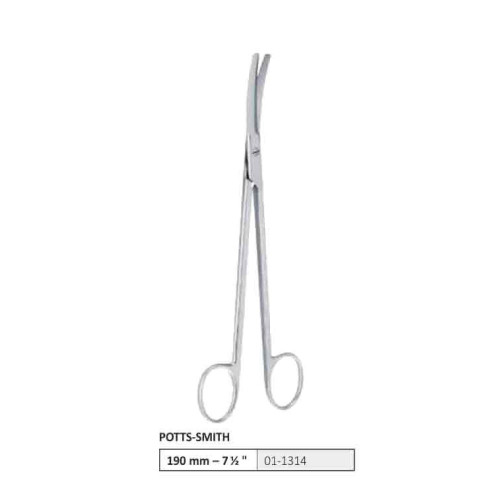
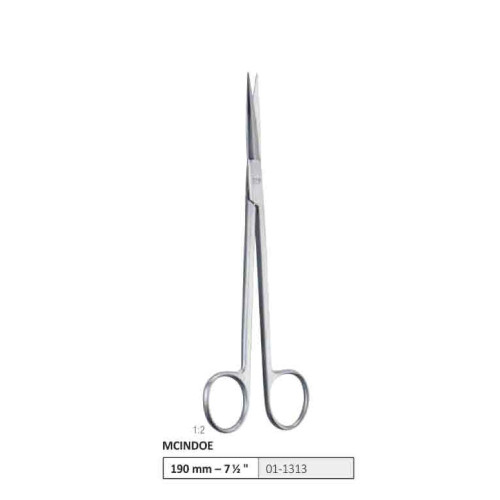
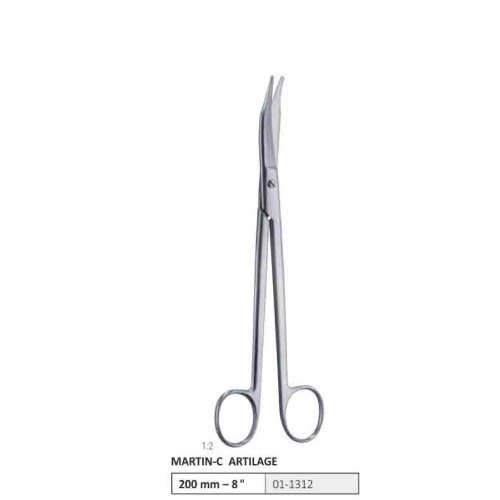
Cartilage scissors are surgical cutting instruments designed for controlled cutting and dissection of cartilage and other tissues where an appropriate scissors configuration is required. They form part of the broader range of surgical scissors used in operating environments, with design variations allowing instruments to be selected according to the intended application, access requirements, and handling preferences.
As with other surgical scissors, factors such as blade geometry, tip configuration, curvature, overall length, and instrument construction can affect how an instrument is selected for a particular surgical application. General surgical-instrument references describe scissors as hand-held instruments that use a shearing action between two blades, while specific cartilage-scissor designs can vary by manufacturer and model.
Stone Instruments Co. manufactures and supplies surgical-grade medical-device instruments from Sialkot, Pakistan, including standard and customized surgical instruments. The company's website lists Cartilage Scissors within its General Surgery instrument range and positions Stone Instruments for international surgical-instrument supply.
Cartilage Scissors for Surgical Applications
Surgical scissors are selected according to the material or tissue being cut, the required level of control, access to the working area, and the configuration of the instrument. A surgical scissors instrument generally consists of two blades operated through handles or rings, producing a shearing action as the blades pass one another.
Cartilage scissors are a specialized category within surgical scissors. Depending on the particular model, cartilage scissors may differ in blade shape, cutting-edge configuration, curvature, tip design, and length. These differences are important because the instrument selected should correspond to the requirements of the intended surgical application rather than simply the product name.
For professional procurement teams, distributors, and medical-device suppliers, the specific article number and manufacturer's product specification should be used to identify the required configuration. Where a clinical application or exact instrument design is not stated in the manufacturer's documentation, it should be confirmed directly with the supplier.
Types and Configurations of Cartilage Scissors
Cartilage scissors are available in different configurations across the surgical-instrument market. However, configurations should be evaluated from the specifications of the individual instrument rather than assumed from the category name.
Straight and Curved Configurations
Straight and curved blade configurations can provide different approaches to the working area. Straight scissors provide a direct blade path, while curved designs can provide an altered working angle where the surgical application requires it.
Not every cartilage scissors model has the same curvature. Buyers should therefore check the individual product specification before ordering.
Sharp and Blunt Tip Designs
Tip geometry is another consideration when selecting surgical scissors. Depending on the instrument design, tips may be sharp, blunt, or incorporate another specified configuration.
The appropriate tip should be selected according to the intended application and the manufacturer's documented specifications. Stone Instruments' individual article information should be used when a precise tip configuration is required.
Different Instrument Lengths
Cartilage scissors can also be produced in different overall lengths. Instrument length can affect access, reach, handling, and suitability for a particular operating environment.
For B2B purchasing, the required length should always be confirmed against the article number and current product specification rather than inferred from the category name.
Blade Geometry
Blade geometry is an important part of surgical-scissors selection. Some cartilage-scissors designs available in the wider medical-device market use specific cutting-edge configurations, including serrated edges. For example, publicly documented cartilage-scissors products include straight instruments with serrated blades and other designs with different configurations.
These examples demonstrate that cartilage scissors is a category rather than a single standardized design. Buyers should confirm the blade geometry of the exact Stone Instruments article before placing an order.
How to Choose Cartilage Scissors
Selecting cartilage scissors for professional use requires more than choosing a product based on its category name. Buyers should evaluate the instrument specification against the intended application and procurement requirements.
Consider the following factors:
-
Intended application: Identify the surgical application and the type of cutting or dissection required.
-
Blade configuration: Confirm whether the required instrument has straight, curved, serrated, or another documented blade configuration.
-
Tip design: Verify whether the required model has sharp, blunt, or another specified tip configuration.
-
Curvature: Determine whether a straight or curved instrument is appropriate for the required access and working angle.
-
Overall length: Confirm the required instrument length from the manufacturer's product specification.
-
Working length: Where applicable, check the usable working portion of the instrument rather than relying only on overall length.
-
Handling and control: Consider how the instrument's geometry and handle configuration correspond with the intended operating environment.
-
Product identification: Use the manufacturer's article number to distinguish between similar models.
-
Material and specification: Confirm the documented material and manufacturing specification before bulk procurement.
-
Procurement requirements: For international orders, confirm quantities, packaging, documentation, customization, and shipping requirements before issuing a purchase order.
For Stone Instruments products, article numbers provide an important reference point when communicating about specific instruments. If dimensions, material grades, blade details, or other specifications are not displayed for a particular model, buyers should request confirmation from Stone Instruments before ordering.
Cartilage Scissors Manufacturer and Supplier
Stone Instruments Co. is a surgical-instrument manufacturer based in Sialkot, Pakistan. Its website states that the company manufactures standard and customized surgical-grade medical-device instruments and serves the surgical-instrument market across multiple categories. Cartilage scissors are listed within its General Surgery range.
The company also describes its capabilities in supplying customized instruments and working with a customer's preferred raw-material supplier where required. Its website states that products are supplied with raw-material certification with each shipment. These claims should be understood within the scope of the company's documented manufacturing and supply processes.
For distributors, importers, medical-device suppliers, and other B2B buyers, this makes the article number and product specification particularly important. When requesting quotations for cartilage scissors, buyers can identify the required model and then confirm dimensions, configuration, material, quantity, packaging, documentation, and customization requirements with the manufacturer.
Stone Instruments also describes itself as an exporter and manufacturer of surgical instruments in Sialkot, Pakistan.
Quality and Manufacturing
Surgical instruments require controlled manufacturing processes because dimensional accuracy, blade geometry, surface condition, assembly, and finishing can all be relevant to the final instrument.
Stone Instruments states that it manufactures instruments using imported stainless steel sourced from the USA, Germany, France, and Japan. The company also states that it can work with a customer's preferred raw-material supplier when required.
According to Stone Instruments, its quality-management system includes ISO 13485 and ISO 9001 certification, and the company states that it follows U.S. FDA Current Good Manufacturing Practices (CGMP) and operates as an FDA-approved facility. Its website also states that products undergo quality-control assessment. These statements are company-reported claims and should be evaluated against the applicable certificates, registrations, and regulatory documentation for the specific product and market.
For B2B buyers, quality evaluation should therefore include reviewing the applicable product specifications and documentation rather than relying only on a general company-level certification statement.
Why Choose Stone Instruments for Cartilage Scissors?
For professional buyers, the relevant considerations are the manufacturer's documented capabilities and the ability to identify the required instrument accurately.
Stone Instruments documents the following capabilities:
-
Manufacturing of standard surgical instruments
-
Customized surgical-instrument manufacturing
-
Surgical-grade medical-device instruments
-
Product identification through article numbers
-
Manufacturing in Sialkot, Pakistan
-
International exporter and supplier positioning
-
Quality-management certifications stated by the company
-
Quality-control assessment of products
-
Stainless-steel sourcing from multiple international sources
-
Ability to work with a customer's preferred raw-material supplier where required
-
Customer support for inquiries, orders, and after-sales service
Stone Instruments also describes more than 25 years of company experience and identifies itself as a family-owned and operated business.
For a specific cartilage scissors requirement, buyers should still confirm the exact model, article number, dimensions, configuration, material specification, and applicable documentation before purchase.
Cartilage Scissors for Distributors and International Buyers
Cartilage scissors may be sourced by surgical-instrument distributors, medical-device suppliers, importers, wholesalers, hospitals, procurement departments, OEM buyers, and private-label businesses.
For bulk or international procurement, the following information should be confirmed before placing an order:
-
Article number: Use the manufacturer's exact product identification.
-
Dimensions: Confirm overall length and any other relevant dimensions.
-
Configuration: Verify straight or curved design and the documented blade configuration.
-
Tip design: Confirm the specified tip type.
-
Material: Request the applicable material specification and documentation.
-
Quantity: Confirm the required order quantity with the supplier.
-
Packaging: Establish the packaging requirements for the order.
-
Regulatory documentation: Confirm which documentation is applicable to the destination market and product.
-
Customization: Provide drawings, specifications, branding requirements, or other technical information where customization is requested.
-
Shipping and export requirements: Confirm destination, shipping terms, documentation, and other applicable export requirements.
Stone Instruments states that its instruments can be manufactured in standard and customized configurations. For OEM or private-label requirements, buyers should discuss the exact technical specification and documentation requirements directly with the manufacturer rather than assuming that every catalogue instrument can automatically be supplied under a private-label arrangement.